Situational awareness is more than just being aware of your surroundings; it’s a crucial skill for navigating everyday life and high-pressure situations. This comprehensive guide delves into the multifaceted nature of situational awareness, exploring key elements such as observation, cognitive processes, and physical preparedness. Understanding and applying these strategies will empower you to confidently and safely navigate various contexts, from personal interactions to professional environments and emergency situations.
By understanding the nuances of observation, from subtle environmental cues to non-verbal communication, you’ll be better equipped to anticipate potential risks and opportunities. This comprehensive guide also details effective cognitive strategies to enhance your decision-making in challenging situations. Furthermore, you’ll discover the vital role of physical and environmental awareness in bolstering your overall situational awareness.
Defining Situational Awareness
Situational awareness is a critical skill for navigating the complexities of daily life. It encompasses our understanding of our surroundings, the people in them, and the potential dangers or opportunities present. This understanding allows us to make informed decisions and react appropriately to changing circumstances. A strong sense of situational awareness empowers individuals to stay safe and achieve success in various contexts.Situational awareness is distinct from general awareness, which is a broader understanding of the world.
Situational awareness focuses specifically on the immediate environment and the potential implications for individuals within that environment. It’s about recognizing patterns, anticipating events, and understanding the interplay of factors in a specific setting.
Key Components of Situational Awareness
Situational awareness is a multifaceted concept composed of several interconnected elements. These components work together to provide a comprehensive understanding of the current situation. These include:
- Perception: The ability to accurately observe and interpret sensory information from the environment. This includes visual cues, auditory clues, and even subtle changes in the atmosphere. Effective perception requires a focused attention and an openness to detail.
- Understanding: The cognitive process of analyzing the observed information. This involves recognizing patterns, identifying relationships between different elements, and forming conclusions about the situation.
- Projection: The ability to anticipate potential future developments based on the current situation. This involves considering various possibilities, predicting outcomes, and assessing the risks associated with different courses of action.
Importance of Situational Awareness Across Contexts
Situational awareness is invaluable in a wide array of contexts, impacting personal safety, professional performance, and emergency response. A keen awareness of surroundings allows individuals to navigate complex situations with greater confidence and control.
Situational Awareness Across Different Contexts
| Context | Description | Example | Importance of Situational Awareness in that Context |
|---|---|---|---|
| Personal Safety | Recognizing potential threats and taking precautions to avoid harm. | Observing a dark alleyway with suspicious figures before entering, opting for a well-lit alternative route. | Reduces the risk of accidents, assaults, or other personal safety concerns. |
| Professional Settings | Understanding the dynamics of the workplace and anticipating potential challenges. | A manager noticing rising tensions between team members and proactively addressing the issue before it escalates. | Enhances problem-solving, fosters productive collaboration, and improves decision-making. |
| Emergency Situations | Quickly assessing a dangerous or unpredictable environment to make informed decisions. | A first responder identifying the location of a fire hazard in a building fire, or a hiker recognizing the warning signs of an impending storm. | Improves response times and increases the likelihood of successful outcomes in crisis situations. |
| Transportation | Understanding traffic conditions, potential hazards, and other drivers’ behavior. | A driver noticing a traffic jam and adjusting their route accordingly, or noticing a distracted driver. | Reduces the likelihood of accidents and delays. |
Enhancing Observation Skills
![What Are the 4 Levels of Situational Awareness? [+Exercises]](https://easytut.web.id/wp-content/uploads/2025/09/Blog-improve-SituationalAwareness-v2.jpg "What Are the 4 Levels of Situational Awareness? [+Exercises]")
Developing keen observational skills is crucial for improving situational awareness. A heightened awareness of your surroundings, including subtle details and non-verbal cues, significantly enhances your ability to anticipate potential threats or opportunities. This proactive approach empowers you to react effectively and make informed decisions in dynamic environments.Effective observation involves more than simply seeing; it’s about actively seeking out and interpreting information.
This active engagement with the environment fosters a deeper understanding of potential risks and facilitates more effective responses. By meticulously observing details, individuals can gain valuable insights into the potential for conflict or cooperation in a given situation.
Methods to Sharpen Observational Skills
A conscious effort to improve observational skills yields significant benefits in various contexts. Practicing techniques like focused attention, active scanning, and detailed note-taking enhances the ability to perceive and retain information effectively.
- Focused Attention: Practicing mindfulness and concentrating on specific details in a given environment, like the location of entrances and exits, or the number of people present, is vital. Regular practice of this skill enhances the ability to filter out distractions and maintain focus on pertinent details. This allows for a more comprehensive understanding of the situation at hand.
- Active Scanning: Employing a systematic approach to scanning the environment, using your peripheral vision, and looking for unusual activity or deviations from the norm is key. This proactive approach involves continuously assessing the surrounding environment, rather than passively observing.
- Detailed Note-Taking: Recording observations in a structured format, including descriptions of individuals, objects, and their locations, can provide a valuable reference point. This method allows for a more thorough and accurate recollection of details, which can prove crucial in later analyses.
Examples of Active Environmental Scanning
Actively scanning your surroundings involves systematically identifying potential threats or opportunities. This requires a proactive approach, rather than passively observing.
- Identifying Potential Threats: Noticing a suspicious-looking individual lurking near an ATM or a group of people arguing loudly in a secluded area could signal potential threats. Similarly, noticing unusual activity, such as individuals avoiding eye contact, can also be a sign of something to consider.
- Identifying Opportunities: Observing a group of people gathering for a community event or a collaborative project in progress can provide clues about the potential for beneficial interactions and partnerships.
- Assessing Crowd Dynamics: Monitoring the movement of people and observing their interactions allows for a more accurate assessment of the overall mood and potential for disruptive behaviour.
Importance of Non-Verbal Cues and Subtle Changes
Non-verbal cues and subtle changes in the environment often provide crucial insights into potential threats or opportunities. Pay close attention to body language, facial expressions, and changes in the surroundings to develop a deeper understanding of the situation.
- Non-verbal Cues: Changes in posture, tone of voice, and facial expressions can signal stress, anxiety, or aggression. A sudden shift in demeanour could be a potential indicator of trouble brewing.
- Subtle Changes in Surroundings: Pay attention to subtle changes in the environment, such as the placement of objects, the addition or removal of people, or unusual sounds. These details can sometimes provide crucial hints about the presence of a threat or an opportunity.
Peripheral Vision Techniques
Peripheral vision plays a significant role in situational awareness. Using it effectively enhances your ability to perceive potential threats or opportunities that may not be directly in your central field of vision.
- Scanning with Peripheral Vision: Regularly shifting your gaze to the edges of your visual field, while maintaining a general awareness of your central field, allows for a wider range of perception.
- Using Peripheral Vision for Threat Detection: This is especially crucial in crowded or potentially hazardous environments, where threats may emerge from the periphery. This can help to spot unexpected movements or suspicious behaviours that may otherwise be missed.
Observational Skills for Different Environments
The specific observational skills required vary depending on the environment.
| Environment | Specific Observational Skills |
|---|---|
| Crowded Market | Scanning for potential theft, observing crowd dynamics, paying attention to agitated behaviour. |
| Residential Neighbourhood | Noticing unfamiliar vehicles or individuals, paying attention to unusual noises, monitoring any potential break-ins. |
| Remote Area | Recognizing potential wildlife threats, identifying possible hazards in the environment, and being aware of potential weather conditions. |
Developing Cognitive Processes
Cultivating sharp cognitive skills is crucial for effective situational awareness. A well-trained mind can process information more rapidly and accurately, leading to quicker reactions and more effective problem-solving. This involves not only understanding the information itself but also recognizing patterns, anticipating potential threats, and developing flexible responses. Mental agility and adaptability are key components in this process.Effective situational awareness requires more than just observation; it demands the ability to analyze and interpret the gathered information.
This involves a range of cognitive functions, including rapid processing, pattern recognition, and the formulation of hypotheses. By honing these abilities, individuals can more accurately assess the current situation and proactively anticipate potential problems.
Improving Information Processing Speed and Accuracy
Rapid and accurate information processing is essential for effective situational awareness. Strategies like focused attention exercises, mental visualization, and using memory aids can enhance these capabilities. Practicing rapid recall and reaction times, through drills and simulations, can further improve efficiency. Moreover, maintaining a healthy lifestyle through sufficient sleep, a balanced diet, and regular exercise directly contributes to cognitive function.
Importance of Mental Agility and Adaptability
Mental agility and adaptability are crucial for responding effectively to changing circumstances. The ability to quickly adjust strategies and plans based on new information is vital for maintaining situational awareness. A flexible mindset allows individuals to anticipate and counter unexpected developments. For instance, in a crowded marketplace, recognizing that a sudden rush of people is creating a bottleneck can lead to more proactive responses.
Anticipating Potential Problems and Developing Contingency Plans
Anticipating potential problems is a critical aspect of situational awareness. This requires considering various scenarios and possible outcomes. Developing contingency plans allows for proactive responses to challenges. For example, if a wildfire is approaching, having a pre-determined evacuation route and emergency contact information can mitigate potential risks. Practicing hypothetical scenarios can strengthen one’s ability to anticipate problems and develop effective responses.
Comparing Mental Preparation and Stress Management Methods
Numerous methods can be employed for mental preparation and stress management. Meditation, mindfulness exercises, and cognitive restructuring techniques can help individuals maintain focus and composure under pressure. Physical activities such as jogging or yoga can also be valuable stress-relievers. The effectiveness of each method can vary depending on individual preferences and needs. Experimentation is key to finding the most effective approach for each person.
Cognitive Biases and Mitigation Strategies
Cognitive biases can significantly impact decision-making and judgments, potentially hindering effective situational awareness. Recognizing and mitigating these biases is essential. The table below contrasts common cognitive biases with strategies to counter them.
| Cognitive Bias | Description | Mitigation Strategy |
|---|---|---|
| Confirmation Bias | Seeking out and interpreting information that confirms pre-existing beliefs while ignoring contradictory evidence. | Actively seeking out diverse perspectives and challenging assumptions. |
| Anchoring Bias | Over-reliance on the first piece of information received, even if it’s irrelevant or unreliable. | Questioning the source and validity of initial information and seeking additional data. |
| Availability Heuristic | Overestimating the likelihood of events that are easily recalled or readily available in memory. | Actively seeking diverse information and considering a wider range of possibilities. |
| Framing Effect | The way information is presented can influence judgment, even if the underlying data remains unchanged. | Seeking multiple perspectives and analyzing the issue from different angles. |
Physical Preparedness and Awareness
Physical preparedness plays a crucial role in enhancing situational awareness. A physically fit individual is better equipped to react quickly and effectively to potential threats or challenging situations. Maintaining a high level of physical conditioning contributes to a heightened sense of alertness and a more confident response in potentially dangerous circumstances. This includes not only strength and endurance but also agility, balance, and quick reaction time.Physical fitness is a critical component of situational awareness.
A strong physical foundation allows for quicker responses and more effective decision-making under pressure. Improved physical conditioning enhances mental acuity, enabling faster processing of information and quicker reactions. This translates directly into improved situational awareness, enabling individuals to perceive and respond to threats or opportunities more effectively.
Importance of Physical Condition
Physical fitness is paramount for effective situational awareness. Strong physical conditioning allows for quicker reactions, better balance, and increased stamina during prolonged or high-stress situations. This translates to a heightened ability to observe and assess potential threats or opportunities, ultimately improving situational awareness. A person in good physical shape is better able to handle unexpected events or maintain composure in challenging environments.
Improving Physical Stamina and Agility
Regular exercise, including cardiovascular training and strength training, is crucial for improving physical stamina and agility. Cardiovascular activities like running, swimming, or cycling build endurance and improve the body’s ability to deliver oxygen to muscles. Strength training exercises, such as weightlifting or bodyweight routines, increase muscle strength and power, enhancing agility and reaction time. Consistency in these activities is key to achieving significant improvements.
Maintaining Alertness Without Overexertion
Maintaining a heightened state of alertness is essential for situational awareness, but overexertion can lead to fatigue and decreased responsiveness. A balanced approach is needed to optimize physical condition without compromising alertness. This involves incorporating rest and recovery into the training schedule. Adequate sleep, proper nutrition, and stress management techniques are equally important for maintaining peak performance and avoiding overexertion.
Recognizing individual limitations and adjusting training intensity accordingly is critical.
Exercises for Balance, Agility, and Reaction Time
A variety of exercises can improve balance, agility, and reaction time. These exercises should be tailored to individual fitness levels and progressively challenging. Examples include:
- Balance exercises: Standing on one leg, performing single-leg squats, or using balance boards.
- Agility drills: Shuttle runs, ladder drills, or cone drills.
- Reaction time exercises: Simple reaction tests using visual or auditory stimuli, such as catching a falling object or responding to a sound.
Consistency and gradual progression in these exercises are crucial for improvement.
Comparison of Physical Preparation Strategies
| Physical Preparation Strategy | Description | Impact on Situational Awareness |
|---|---|---|
| Cardiovascular Training | Activities like running, swimming, or cycling to enhance endurance and oxygen delivery. | Improved stamina, enabling longer periods of vigilance and quicker responses to threats. |
| Strength Training | Activities like weightlifting or bodyweight routines to increase muscle strength and power. | Enhanced agility, balance, and reaction time, leading to quicker and more effective responses to situations. |
| Flexibility and Mobility Training | Stretching, yoga, or Pilates to improve range of motion and reduce muscle stiffness. | Increased body awareness, improved coordination, and faster movement in response to unexpected events. |
| Balance and Coordination Exercises | Activities like standing on one leg, using balance boards, or performing specific yoga poses. | Improved balance and stability, crucial for maintaining composure in unpredictable environments. |
Environmental Awareness
Environmental awareness is a crucial component of situational awareness. It involves understanding and interpreting the environment around you, recognizing potential hazards, and anticipating problems. This proactive approach allows you to adapt your actions and mitigate risks, enhancing your overall safety and well-being. By understanding the interplay between your surroundings and your actions, you can make informed decisions and maintain a heightened sense of situational awareness.
Methods for Understanding and Interpreting Environmental Cues
Effective interpretation of environmental cues requires a keen observational skillset. This involves actively noticing details, recognizing patterns, and drawing conclusions from the observed information. Pay close attention to subtle changes in the environment, such as unusual sounds, smells, or movements. Consider the context of these cues; for example, a sudden increase in traffic noise might indicate a rush hour, but it could also signal an emergency or incident.
Recognizing Potential Hazards and Risks
Identifying potential hazards and risks in a given environment is vital for maintaining situational awareness. This process involves anticipating potential problems based on the specific characteristics of the environment. A construction site, for example, presents inherent dangers like falling objects and heavy machinery. Similarly, a dimly lit alleyway may conceal hidden threats. Recognizing these potential risks allows for proactive measures to mitigate them.
Anticipating Potential Problems Based on Environmental Factors
Anticipation is a key aspect of situational awareness. By understanding how environmental factors influence potential problems, individuals can proactively adjust their behaviour to reduce risks. For instance, knowing that a storm is approaching allows individuals to seek shelter and take precautions to prevent injury. Similarly, recognizing the presence of a large crowd in a confined space suggests the potential for congestion and the need for increased caution.
Environmental Factors Impacting Situational Awareness
Several environmental factors can significantly impact situational awareness. These factors, often overlooked, can contribute to or mitigate potential risks.
- Time of Day: Different times of day can influence the environment. For instance, darkness can significantly reduce visibility, increasing the risk of accidents. Conversely, the presence of natural light can increase visibility and reduce risks.
- Weather Conditions: Changes in weather, such as rain, snow, or strong winds, can alter the terrain and create hazardous conditions. Rain-slicked roads, for example, can increase the risk of accidents.
- Crowd Density: Large crowds in confined spaces can create congestion, potentially leading to accidents or other incidents. Understanding the density of the crowd is important for maintaining a safe distance and adjusting your behaviour.
- Lighting Conditions: Adequate lighting is essential for maintaining situational awareness. Poor lighting can obscure potential hazards and risks. Conversely, intense light can be blinding, affecting your perception of the environment.
- Surrounding Structures: The presence of surrounding structures, such as buildings, trees, or fences, can influence visibility and the potential for concealment. High walls, for example, can obscure your view and provide cover for potential threats.
- Terrain: The physical terrain, such as hills, valleys, or uneven surfaces, can affect your mobility and increase the risk of falls or other accidents.
Classifying Environments and Environmental Factors
This table Artikels different environments and the specific environmental factors to consider for each.
| Environment | Environmental Factors |
|---|---|
| Construction Site | Heavy machinery, falling objects, uneven terrain, poor visibility, noise levels |
| Crowded Marketplace | Large crowds, narrow pathways, potential for jostling, limited visibility, noise |
| Dark Alleyway | Dim lighting, lack of visibility, potential for concealment, increased risk of encounters with unknown individuals |
| Remote Forest Path | Uneven terrain, dense foliage, potential for wildlife encounters, limited cell service, changes in weather |
| Urban Street at Night | Dim lighting, potential for criminal activity, limited visibility, increased risk of traffic incidents |
Social Awareness and Interactions
![What Are the 4 Levels of Situational Awareness? [+Exercises]](https://easytut.web.id/wp-content/uploads/2025/09/Blog-Image-Situational-Awareness-Training-V3.jpg "What Are the 4 Levels of Situational Awareness? [+Exercises]")
Social awareness is a crucial component of situational awareness. It involves understanding and interpreting the social cues surrounding us, enabling us to anticipate potential reactions and navigate social interactions effectively. This encompasses not only verbal communication but also the often more subtle nuances of non-verbal cues. Recognizing and responding appropriately to social cues fosters positive interactions and reduces potential risks.Observing and interpreting social cues is a complex process, often requiring us to consider the context of the interaction.
Understanding the intentions and motivations of others requires an awareness of their background, current state, and the potential influences on their behavior. A thoughtful approach to social interaction can help us navigate challenging situations and maintain positive relationships.
Observing and Interpreting Social Cues
Social cues are signals that convey meaning beyond the spoken word. These cues can include facial expressions, body language, tone of voice, and even the use of personal space. Accurately interpreting these cues requires practice and a keen observation of details. A critical element is understanding the context surrounding the interaction. A smile, for instance, can be interpreted as friendliness or as a forced expression of politeness, depending on the situation.
Understanding Intentions and Motivations
Understanding the intentions and motivations of others is a key aspect of social awareness. We can infer intentions from a combination of verbal and non-verbal cues. For example, if someone is speaking quickly and their body language suggests impatience, we might infer they are feeling rushed. By considering multiple cues, we can often gain a more comprehensive understanding of the individual’s intent.
Importance of Non-verbal Communication
Non-verbal communication often plays a significant role in social interactions. It can convey emotions, attitudes, and intentions far more effectively than words alone. A firm handshake, for example, can convey confidence and respect, while avoiding eye contact might suggest discomfort or dishonesty. Developing the ability to interpret non-verbal cues is a crucial skill for improving situational awareness.
Maintaining Personal Space and Boundaries
Respecting personal space and boundaries is essential in maintaining positive social interactions. Different cultures and individuals have different comfort levels regarding personal space. Being mindful of these differences helps prevent misinterpretations and potential conflicts. Remaining aware of surroundings and potential threats while maintaining personal space and boundaries is an important aspect of situational awareness.
Practical Application: Social Interaction Scenarios
| Social Situation | Key Cues to Observe | Interpretation of Cues | How to Respond |
|---|---|---|---|
| A colleague appears visibly upset and avoids eye contact. | Frowning, avoiding eye contact, tight-lipped, tense posture. | Possible stress, conflict, or disagreement. | Acknowledge their distress with a non-judgmental statement, such as “I’ve noticed you seem upset. Is there anything I can do to help?” |
| A stranger approaches you in a crowded area, asking for directions. | Direct eye contact, polite tone of voice, clear and concise speech, calm body language. | The person is genuinely seeking help. | Provide clear and concise directions. |
| A friend appears withdrawn and sullen. | Minimal eye contact, avoiding conversations, downcast eyes, negative tone. | Possible emotional distress, relationship conflict, or personal issue. | Express concern and offer support in a non-confrontational way. |
| A salesperson is overly enthusiastic and insistent. | Rapid speech, excessive gestures, aggressive tone, insistent follow-up questions. | Trying to pressure a sale. | Remain polite but firm in expressing your needs and boundaries. |
Risk Assessment and Management
Effective situational awareness is incomplete without a robust risk assessment and management strategy. Identifying potential threats, evaluating their likelihood and impact, and developing mitigation plans are crucial for personal safety and well-being. This process allows individuals to proactively address potential dangers and reduce the likelihood of negative outcomes.A comprehensive risk assessment acknowledges that threats are not static; they evolve based on location, time, and social dynamics.
Understanding and proactively addressing these changes is vital for maintaining a high level of situational awareness. This process involves a structured approach to analyzing potential risks, their potential consequences, and the best courses of action to minimize those consequences.
Identifying Potential Threats and Vulnerabilities
Thorough observation is key to identifying potential threats and vulnerabilities. This involves actively scanning the environment for anything unusual or out of place, paying attention to individuals’ behaviors, and recognizing potential warning signs. Analyzing recent local news or crime reports can also highlight specific risks in a particular area. Considering personal habits and routines, and identifying potential points of vulnerability in those habits, is also essential.
For example, walking alone at night in a poorly lit area increases vulnerability to assault.
Evaluating Likelihood and Severity of Risks
Assessing the likelihood and severity of risks is a crucial step in prioritizing potential dangers. Likelihood considers the probability of a threat occurring, while severity evaluates the potential impact if the threat materializes. This analysis often involves considering historical data, such as crime statistics or past incidents in similar situations. Using a scale (e.g., low, medium, high) for both likelihood and severity aids in prioritizing and focusing mitigation efforts.
For example, a high likelihood of petty theft in a crowded marketplace, with a medium severity of financial loss, would warrant a higher priority than a low likelihood of a serious assault in a secluded park, with a high severity of potential harm.
Developing and Implementing Mitigation Strategies
Once risks are identified and evaluated, mitigation strategies must be developed and implemented. These strategies should be tailored to the specific threat and its context. Examples include avoiding high-risk areas at certain times, altering routines, or carrying personal safety items. For instance, if a park is known for petty theft, one could choose to carry less expensive items, avoid carrying large sums of cash, and avoid walking alone at night.
Developing and practicing these strategies in advance enhances their effectiveness.
Creating a Personal Risk Assessment Plan
Creating a personal risk assessment plan involves documenting potential threats, vulnerabilities, and corresponding mitigation strategies. This plan should be personalized and adaptable to the specific circumstances and environment of the individual. It should be reviewed and updated regularly, taking into account any changes in the environment or individual circumstances. For instance, a student’s risk assessment plan might need to be modified based on the specific areas of the campus they frequent and the times of day they are there.
Potential Risks, Likelihood, Severity, and Mitigation Strategies
| Potential Risk | Likelihood (Low/Medium/High) | Severity (Low/Medium/High) | Mitigation Strategies |
|---|---|---|---|
| Assault in a dark alley | Medium | High | Avoid walking alone at night, choose well-lit paths, carry a personal alarm, and inform a friend or family member of your route. |
| Petty theft in a crowded market | High | Medium | Carry only essential items, avoid displaying expensive possessions, and be mindful of your surroundings. |
| Traffic accident | Medium | High | Obey traffic laws, maintain a safe following distance, avoid distractions, and be mindful of road conditions. |
| Natural disaster | Low | High | Stay informed about local weather forecasts, have an emergency plan, and stock essential supplies. |
Personal Safety Strategies
Personal safety is paramount in navigating daily life. Understanding potential threats and developing proactive strategies for mitigating risks are crucial for maintaining well-being and security. This section explores various personal safety strategies applicable to diverse situations, emphasizing the importance of situational awareness and preparedness.
Strategies for Different Situations
Effective personal safety hinges on recognizing the specific risks associated with different environments and contexts. This involves understanding how to adapt your behavior and precautions to the unique characteristics of each situation.
- Public Transportation: Maintaining vigilance on public transport is essential. Avoid displaying expensive items, keep valuables secure, and be aware of your surroundings. Sitting near exits or areas with high foot traffic can increase visibility and potentially improve safety. If feeling uncomfortable, move to a more populated area or communicate with personnel if necessary. Do not hesitate to utilize the emergency services if you feel threatened.
- Walking Alone at Night: Choose well-lit and populated routes. Avoid walking alone in secluded or poorly lit areas. If possible, let someone know your route and estimated return time. Carry a personal alarm or pepper spray for self-defense. Walk with confidence and avoid looking vulnerable.
If confronted, prioritize your safety by running away or utilizing a personal safety tool.
- Social Gatherings: Be mindful of your drink and surroundings. Trust your instincts; if a situation feels unsafe, remove yourself from it. Have a designated driver or plan for a safe ride home. Be cautious of strangers and avoid isolated conversations or interactions. Know your limits and set boundaries, particularly regarding alcohol consumption.
- Home Security: Ensure your home is secure by using sturdy locks and security systems. Maintain good lighting both inside and outside your home. Be wary of strangers at your door and verify their identity before opening. Consider installing security cameras or motion sensors to deter potential intruders. Develop a personal security plan for your home, including emergency contact information.
Responding to Threats
Recognizing and responding appropriately to potential threats is crucial for personal safety. A proactive approach to risk management involves preparation and a structured response.
- Verbal De-escalation: If confronted by a threatening individual, maintain a calm and assertive demeanor. Speak clearly and firmly to de-escalate the situation. Do not engage in physical confrontation unless absolutely necessary.
- Physical Self-Defense: Learning basic self-defense techniques can provide a sense of security and empower you to protect yourself. These techniques should only be used as a last resort. Prioritize avoiding physical confrontation.
- Emergency Response: Knowing how to contact emergency services and understanding their response protocols is vital. Ensure your emergency contacts are readily available and that you understand how to utilize emergency resources effectively.
Importance of Personal Safety
Personal safety is fundamental to overall well-being. A safe environment fosters confidence, reduces stress, and promotes a sense of security.
| Situation | Recommended Personal Safety Strategies |
|---|---|
| Public Transportation | Maintain vigilance, secure valuables, be aware of surroundings, and utilize emergency services if necessary. |
| Walking Alone at Night | Choose well-lit routes, inform someone of your plans, carry a personal alarm or pepper spray, and maintain confidence. |
| Social Gatherings | Be mindful of drinks, trust instincts, have a designated driver, be cautious of strangers, and set boundaries. |
| Home Security | Use sturdy locks, maintain good lighting, be wary of strangers, and consider security systems. |
Continuous Improvement and Practice
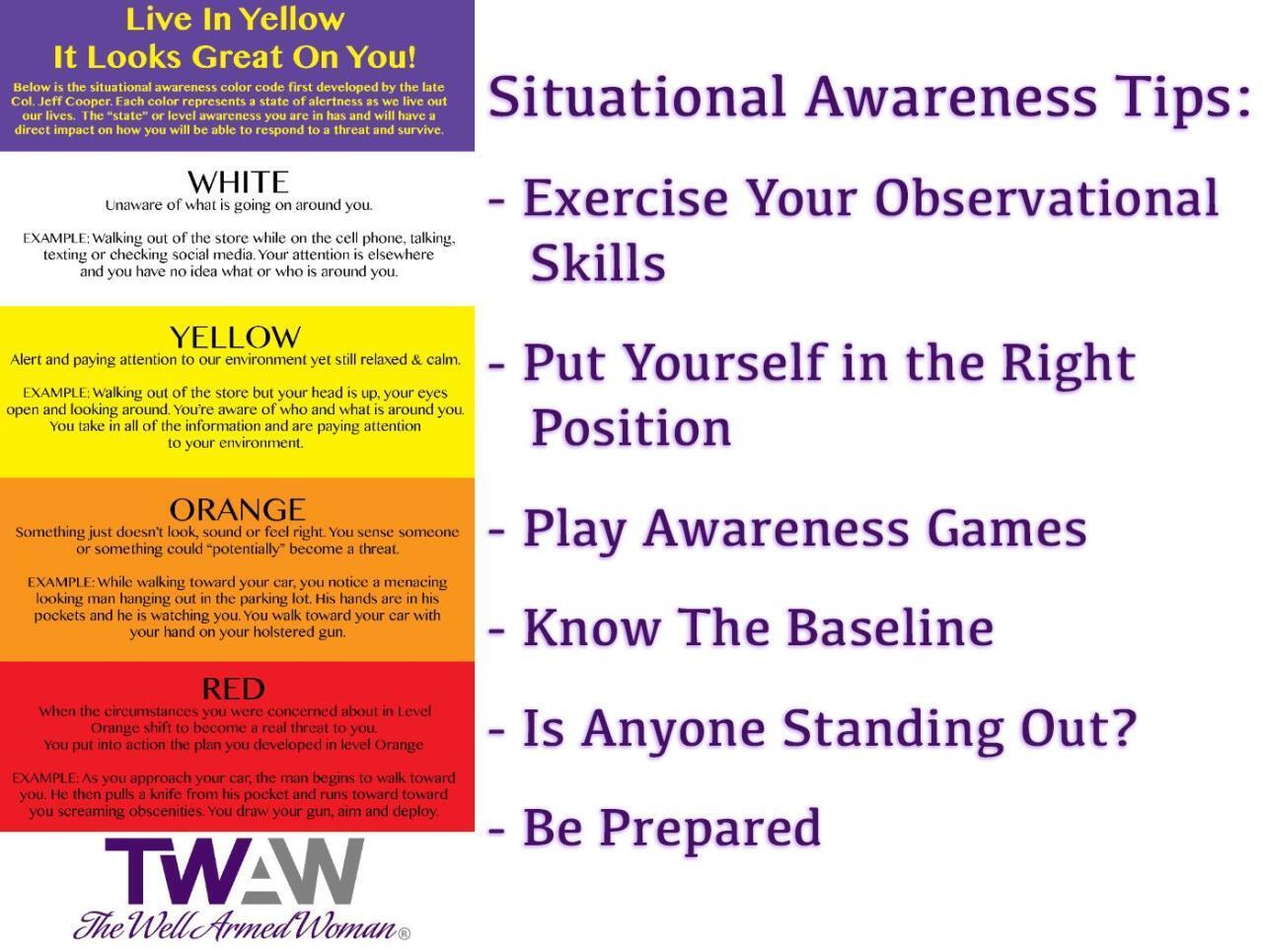
Cultivating situational awareness is not a one-time achievement; it’s a continuous process of learning and refinement. Consistent practice and a commitment to ongoing training are crucial for maintaining and enhancing these vital skills. This ongoing effort ensures that your awareness remains sharp and adaptable to evolving circumstances.
Methods for Practicing Situational Awareness
Sustained improvement in situational awareness demands consistent effort. Regular practice, incorporating various exercises and activities, is essential for maintaining and honing these skills. This includes actively seeking opportunities to observe and analyze your surroundings.
- Regular Self-Assessment: Periodically reflect on recent experiences, identifying situations where your awareness could have been better. Analyze what cues you missed, and how you could have reacted more effectively. This introspective process helps identify areas for improvement.
- Simulated Scenarios: Engage in role-playing or simulations to recreate potential hazardous or unpredictable situations. These exercises can help you practice your response mechanisms and decision-making skills under pressure. This can be done with a partner or group.
- Environmental Scanning: Actively observe your surroundings, focusing on details that might normally be overlooked. Pay attention to the posture, movement, and behavior of individuals around you. This practice can be integrated into daily routines like commuting or shopping.
- Critical Thinking Exercises: Regularly engage in activities that challenge your critical thinking skills. Analyze news reports, current events, or hypothetical situations to develop the ability to identify potential risks and threats.
Importance of Ongoing Training and Refinement
Situational awareness skills, like any other skill, need consistent practice and refinement to remain effective. A lapse in training can lead to a decline in awareness, making you more susceptible to potential dangers. Ongoing training ensures that your awareness remains sharp and adaptable to evolving circumstances.
- Adaptability to Change: The world is constantly changing, and new threats and dangers emerge. Continuous training ensures that your situational awareness skills remain relevant and effective in a dynamic environment. This means regularly updating your knowledge about potential risks.
- Skill Maintenance: Situational awareness is a muscle that needs exercise to stay strong. Like any muscle, if not used regularly, it can weaken. Consistent training helps maintain and enhance your observational, cognitive, and physical abilities.
- Reduced Risk: Improved situational awareness leads to a reduction in the likelihood of encountering dangerous situations. This is because heightened awareness allows you to anticipate potential problems and take preventive measures.
Examples of Situational Awareness Exercises
Various exercises can enhance situational awareness skills. These activities provide opportunities for practice in different settings and scenarios.
- Public Transportation Observation: Pay close attention to passengers’ behavior and interactions on public transportation. Identify potential safety concerns and practice evaluating the environment around you.
- Walking in a Crowd: Observe the interactions and movements of people around you in a crowded environment. Practice maintaining awareness of your surroundings and potential hazards.
- Simulated Emergency Response: Engage in simulated emergency scenarios, such as a fire or medical emergency. Practice your responses to these situations while maintaining situational awareness.
Resources for Learning and Practicing Situational Awareness Skills
Numerous resources are available to support your learning and practice of situational awareness skills. These resources can offer structured guidance and valuable insights.
- Online Courses: Many online platforms offer courses focusing on situational awareness, often incorporating interactive exercises and practical scenarios.
- Books and Articles: Books and articles on personal safety and security frequently address situational awareness strategies and techniques. These provide valuable insights and practical advice.
- Workshops and Seminars: Workshops and seminars can offer practical training and guidance, allowing for direct interaction with instructors and other participants.
Situational Awareness Training Resources
| Resource | Benefits |
|---|---|
| Online Courses (e.g., Coursera, edX) | Structured learning, interactive exercises, diverse content |
| Self-Defense Classes | Physical preparedness, conflict resolution, situational awareness |
| Security Awareness Workshops | Practical application, real-world scenarios, expert guidance |
| Books on Personal Safety | Insightful analysis, practical tips, detailed explanations |
Adaptability and Flexibility
Situational awareness is not a static state; it requires constant adaptation to changing environments and circumstances. Maintaining a high level of awareness involves recognizing and responding to shifts in the situation, which often include unexpected events and evolving threats. This adaptability, coupled with flexibility in strategies, is crucial for effectively managing potential risks and ensuring personal safety.
Importance of Adaptability
Adaptability is paramount in maintaining situational awareness because the environment and the individuals within it are constantly in flux. Unforeseen events, such as a sudden detour in traffic, a change in pedestrian flow, or the appearance of a suspicious person, necessitate immediate adjustments to existing strategies for safety. Failing to adapt can lead to missed opportunities for risk mitigation and increased vulnerability.
Proactive adjustments to plans, based on observed changes, are vital for effective situational awareness.
Adjusting Strategies Based on Changing Circumstances
Effective situational awareness demands a dynamic approach. Recognizing and interpreting subtle changes in the environment and the behavior of others are crucial. This involves a flexible mindset, allowing for modifications to pre-planned strategies. For example, if a planned route becomes congested, a person should consider alternative routes or adjust their pace accordingly. Similarly, a change in the demeanor of a fellow pedestrian might prompt a heightened sense of caution.
Flexibility allows individuals to make these necessary adjustments in real-time.
Responding to Unexpected Events
Unexpected events require swift and appropriate responses. A sudden downpour, for instance, might necessitate seeking shelter or adjusting the pace of travel. A perceived threat, such as a loud argument or a suspicious individual, should trigger a reassessment of the situation and a possible change in approach. These responses are not rigid; they depend on careful observation and a nuanced understanding of the situation.
Swift, measured actions, guided by careful observation and analysis, are crucial in these situations.
Significance of Flexibility in Navigating Complex Situations
Flexibility is essential for navigating complex situations, where multiple variables and potential risks intertwine. A fixed strategy might prove inadequate when dealing with unforeseen developments. For example, in a crowded marketplace, a flexible approach enables individuals to avoid potential bottlenecks, adapt to sudden changes in crowd movement, and respond to any emerging threats, such as pickpockets. This adaptability allows individuals to manage complex situations more effectively and safely.
Scenario-Based Adaptable Strategies
| Scenario | Adaptable Strategies |
|---|---|
| Unexpected Traffic Congestion |
|
| Suspicious Person Observed |
|
| Sudden Weather Change (e.g., downpour) |
|
| Crowded Public Space (e.g., marketplace) |
|
Decision Making Under Pressure
Effective decision-making is crucial in high-pressure situations, often requiring rapid assessments and responses. This ability is vital for maintaining safety and well-being, and can significantly impact outcomes. Developing strategies for sound decision-making under pressure is a continuous process of learning and refinement.Sound decision-making in high-pressure situations involves a systematic approach, encompassing clear thinking, quick action, and the careful evaluation of options.
By prioritizing safety and well-being, individuals can enhance their ability to make sound choices under duress, mitigating potential risks.
Prioritizing Safety and Well-being
Prioritizing safety and well-being in high-pressure situations is paramount. This involves identifying potential risks, assessing the level of danger, and implementing appropriate measures to mitigate harm. Individuals should always consider the potential consequences of their actions and prioritize options that minimize risks.
Clear Thinking and Quick Action
Clear thinking is essential in high-pressure situations. Maintaining composure and focus, despite the pressure, allows for a more rational assessment of the situation. Quick action, based on sound analysis, is often necessary to prevent escalation or further harm.
Evaluating Options and Selecting the Best Course of Action
A critical aspect of effective decision-making under pressure is the ability to evaluate available options. This includes considering potential consequences, risks, and benefits associated with each choice. Choosing the best course of action requires a thorough evaluation, taking into account the specific circumstances and desired outcomes.
Decision-Making Scenarios and Processes
The following table Artikels different scenarios and associated decision-making processes, emphasizing the prioritization of safety and well-being:
| Scenario | Potential Risks | Decision-Making Process |
|---|---|---|
| Evacuating a Building During a Fire | Smoke inhalation, structural collapse, disorientation, panic | Assess the immediate surroundings, identify safe exits, prioritize those with the least risk. Maintain composure to avoid panic and ensure clear communication. |
| Responding to an Active Shooter | Physical harm, uncertainty, potential for escalation | Assess the situation, identify safe cover, and consider the safest means of escape. If possible, attempt to de-escalate the situation. |
| Driving in Heavy Traffic with an Imminent Collision | Injury, property damage, potential for a chain reaction | Anticipate potential hazards, maintain a safe following distance, and avoid sudden maneuvers. If a collision is unavoidable, prioritize minimizing the impact. |
| Dealing with a Difficult Customer | Escalation of conflict, potential for violence, negative impact on work environment | Remain calm, actively listen to the customer’s concerns, and attempt to de-escalate the situation. Seek assistance if necessary. |
Closing Notes
In conclusion, this guide has presented a thorough exploration of the multifaceted nature of situational awareness, encompassing everything from basic observation skills to complex risk assessment strategies. By combining strong observational skills with cognitive strategies, physical preparedness, and environmental awareness, you can significantly enhance your ability to safely and effectively navigate a variety of situations. Ultimately, continuous practice and adaptability are essential to master this valuable life skill.